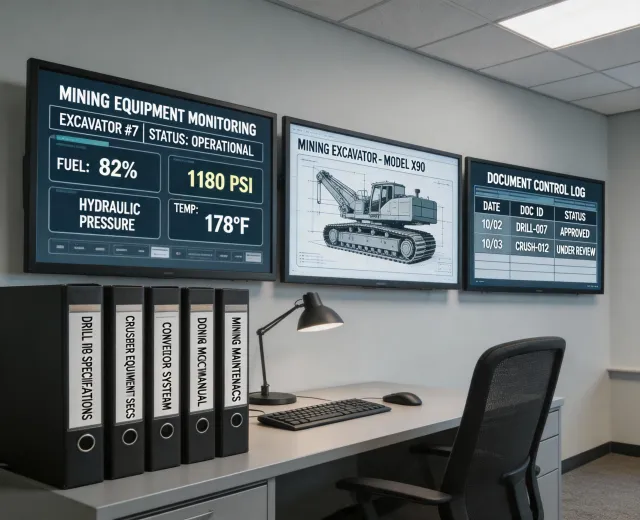
A documentation-first engineering culture for drilling equipment decisions.

Andritz works with operators that need technical evidence, controlled assumptions, and service logic before equipment commitments are made. Our engineering files consolidate geotechnical inputs, duty-cycle registers, power-envelope calculations, and bit-to-rod interface drawings into a single reviewable package. Each file is version-controlled under ISO 9001:2015 change-management rules, with named reviewers at the geology, mechanical, hydraulics, and safety disciplines. No rig specification leaves the desk until the four-discipline sign-off stamp is complete, which is why procurement and safety teams can approve the same document without parallel reconciliation.

Engineering authority is not a larger catalogue. It is the discipline to define the operating envelope, prove the recommendation, and preserve the record. Across 147 completed rig-selection dossiers since 2019, every approved configuration has been traceable back to a measured geotechnical condition, a calculated torque and thrust envelope, a bench-tested wear profile, and a stamped handover index that survives operator turnover and OEM aftermarket changes over the asset's full 25-year service window.

Research and review spaces built around field evidence.

Three dedicated facilities anchor the Andritz drilling-equipment review process: a 420 sqm instrumented test bench rated to 320 kN pullback for validating rotary-head performance, a 680 sqm service workshop with four overhead cranes for teardown of mast assemblies up to 14 m, and a climate-controlled document control room retaining 38,000 pages of inspection records, factory acceptance tests, and field audit closures since 2007. Every space is accessible to operator engineering teams under controlled NDA for witnessed acceptance reviews.
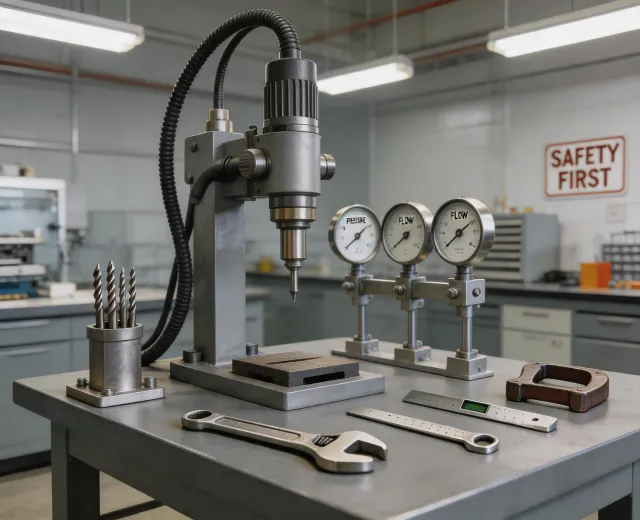

Drilling test bench
Rig service workshop
Technical document control room

Technical references that support reviewable decisions.

Our published technical papers are written for engineering readers who must justify equipment selections in front of an internal review board. Each document states its data basis, measurement method, exclusion criteria, and unresolved uncertainties, and cites the specific rig hours, formation categories, and inspection cycles from which conclusions were drawn.

Need to understand the engineering basis behind a recommendation?

Browse Technical Resources